
The engine is the heart of any vehicle, but the cylinder liner (also known as a cylinder sleeve) is its shield. For auto parts distributors, mechanic shops, and car owners, understanding the nuances of cylinder liners is critical for engine rebuilding and maintenance.
Whether you are sourcing parts for a heavy-duty truck or a passenger sedan, choosing the right liner determines the longevity and efficiency of the engine. In this guide, we break down the mechanics of liners and explain why sourcing Quality and Value Assurance Car Parts is the key to business success.
What is a Cylinder Liner and Why is it Critical?
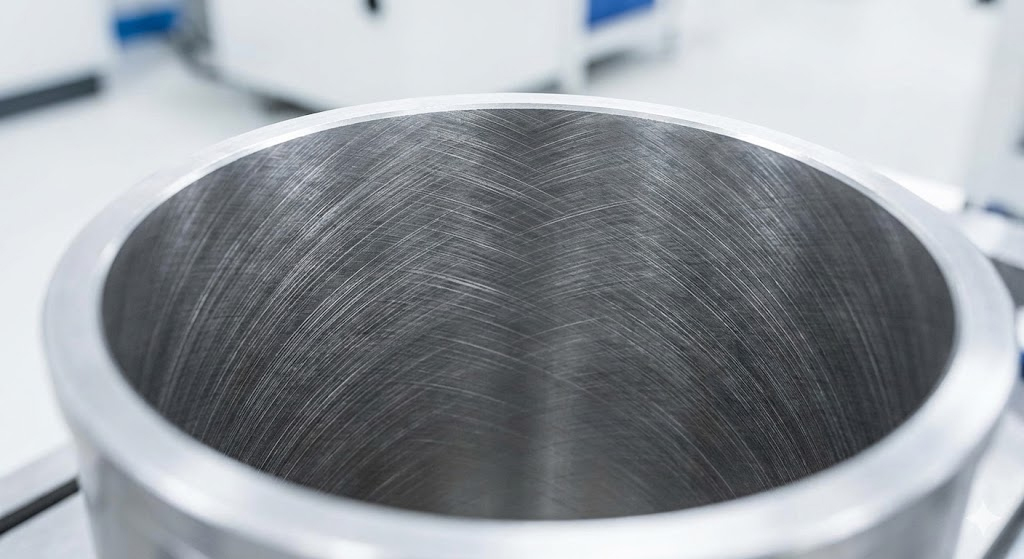
A cylinder liner is a cylindrical component fitted into the engine block to form the cylinder. It acts as the inner wall that the piston rings slide against.
While the engine block provides the structure, the liner handles the extreme stress. It serves three primary functions:
Forming a Sliding Surface: It provides a smooth, wear-resistant surface for the piston and rings, minimizing friction.
Heat Transfer: It conducts heat from the combustion chamber to the engine block or coolant, preventing overheating.
Sealing: It ensures high airtightness, preventing compressed gas from escaping and maintaining engine compression.
Without a high-quality liner, an engine suffers from “blow-by,” loss of power, and catastrophic overheating.
Dry Liners vs. Wet Liners: The Main Types
When browsing catalogs for Chinese Car Parts, you will predominantly encounter two types of liners: Dry and Wet. Understanding the difference is vital for inventory management and repairs.
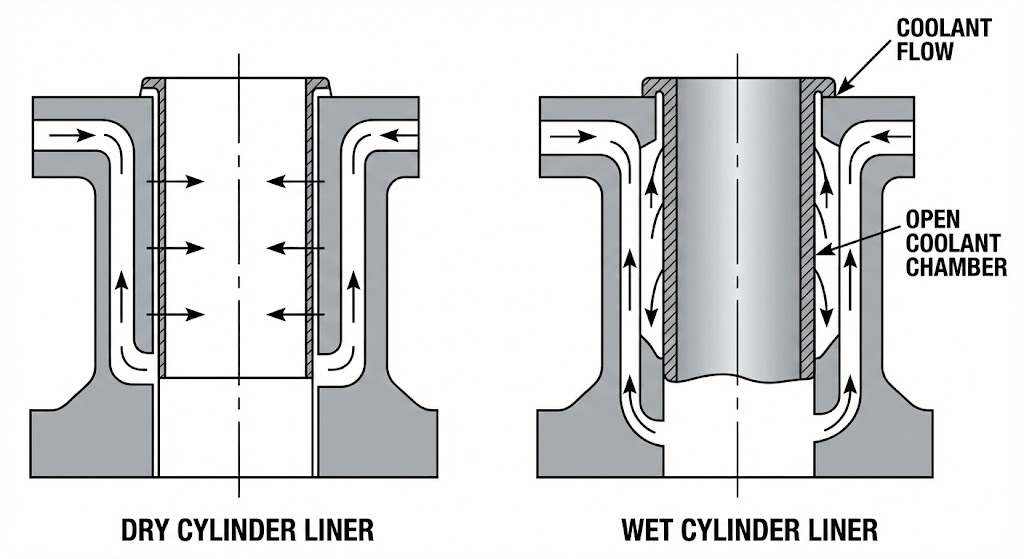
1. Dry Cylinder Liners
Definition: A dry liner is a thin sleeve (usually 1mm to 3mm thick) that is pressed into the cylinder block. It is called “dry” because it does not come into direct contact with the engine coolant.
How it works: It relies on the cylinder block wall to transfer heat to the water jacket.
Where it performs best: Passenger cars and smaller engines where space is tight.
Pros: Increases the rigidity of the engine block; no risk of water leakage into the cylinder.
Cons: Heat dissipation is less efficient than wet liners; difficult to replace during an overhaul.
2. Wet Cylinder Liners
Definition: A wet liner is a standalone cylinder wall that sits directly in contact with the engine coolant. It is usually thicker and heavier than a dry liner.
How it works: The coolant flows directly around the outer surface of the liner for maximum cooling. It uses O-rings to seal the water jacket.
Where it performs best: Heavy-duty trucks, diesel engines, and high-performance machinery where heat management is critical.
Pros: Superior heat dissipation; easy to remove and replace (making engine rebuilds cheaper and faster).
Cons: Risk of coolant leaking into the oil pan if the seals (O-rings) fail.
Material Matters: The Pursuit of Durability
The market for Chinese Car Parts has evolved significantly. Top-tier manufacturers now utilize advanced alloys to ensure longevity.
Cast Iron: The traditional standard, offering excellent wear resistance and lubricating properties (due to graphite content).
Chrome-Plated: Used in high-wear environments for reduced friction.
Phosphating: A surface treatment often used in premium aftermarket parts to prevent rust and improve break-in periods.
Why Sourcing the Right Parts Matters for Your Business
For auto parts supermarkets and distributors, the challenge isn’t just knowing the parts—it’s sourcing them reliably. The global market is flooded with options, but the demand for Quality and Value Assurance Car Parts has never been higher.
Customers today do not want to choose between affordability and reliability. They want both. This is where the supply chain becomes your competitive advantage.
Nanjing Leading Auto Technology: Your Partner in Chinese Car Parts
At Nanjing Leading Auto Technology Co., Ltd., we understand the pressure distributors face. You need parts that fit perfectly, last long, and offer healthy profit margins. We specialize in providing comprehensive solutions for domestic car parts.
Why partner with us?
Massive Inventory & Fast Shipping: We hold a large stock of both Original Equipment (OE) and high-quality Aftermarket (Vice) parts. We understand that a car on the lift is money lost, so we arrange shipments immediately.
Strict Quality Control: Whether it’s a cylinder liner, a piston, or a sensor, we focus on Quality and Value Assurance Car Parts. We verify materials and tolerances to ensure they meet global standards.
Complete Range: We cater to Chinese car brands and global models manufactured in China.
Flexibility: From small shops to large auto parts supermarkets, we offer scalable solutions.
Conclusion
Understanding the distinction between wet and dry cylinder liners allows you to better serve your customers and select the right inventory. However, technical knowledge must be backed by a reliable supply chain.
Don’t compromise on your reputation. Choose a supplier that guarantees both speed and quality.
Ready to upgrade your inventory? Contact Nanjing Leading Auto Technology Co., Ltd. today to get a quote on premium cylinder liners and other Chinese Car Parts. Let us help you drive your business forward with high-quality, cost-effective solutions.