
B2B TESLA LIGHTING GUIDE
1077371-00-C 1077372-00-C LED Headlight Head Lamp for Tesla Model 3 Y 2017-
A practical sourcing, fitment, quality, and wholesale guide for distributors, repair shops, and automotive supermarkets.
1. Introduction: Why LED Headlights Matter in the Tesla Model 3 Y Aftermarket
Headlights are among the most important visible and safety-related components in a modern vehicle. They help the driver see the road, communicate the vehicle’s presence to other road users, and maintain the finished appearance expected from a Tesla. When an original headlight is damaged in a collision, develops a housing problem, suffers internal failure, or becomes difficult to source, distributors and repair shops need a replacement that is correctly identified and commercially dependable.
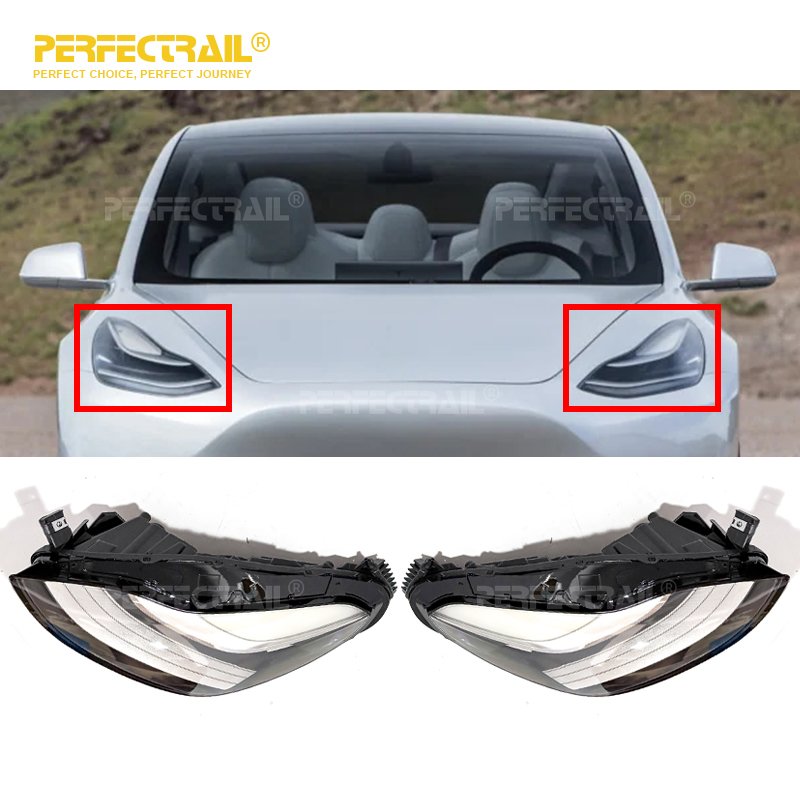
The 1077371-00-C 1077372-00-C LED Headlight Head Lamp for Tesla Model 3 Y 2017- is listed with two side-specific OE references: 1077371-00-C for the left side and 1077372-00-C for the right side. The supplied product page identifies the application as Tesla Model 3 and Model Y from 2017 onward. It lists plastic as the material and OEM-standard size and weight. For a B2B buyer, the combination of the vehicle range, side-specific part numbers, and clear purchasing terms creates a practical foundation for cataloging, quotation, and warehouse control.
Nanjing IDO Auto Technology, operating as IDO GROUP Co., Ltd., serves Tesla parts distributors, Chinese auto parts stores, repair networks, and automotive supermarkets. The company can support original factory parts and aftermarket alternatives, allowing buyers to offer different repair budgets while keeping fitment and OE identification visible. The product page also lists stock support, low MOQ for available items, production sourcing, a 12-month warranty, multiple packaging choices, free laser marking, and pallet film options.
This guide explains how to evaluate the product as a replacement headlamp, a wholesale SKU, and part of a broader Chinese Car Parts sourcing strategy. It covers lighting function, construction, fitment, quality, original and aftermarket supply, installation, logistics, visual SEO, FAQ Schema, and a direct B2B call to action. It follows a practical structure designed for both search engines and professional buyers who need useful information before requesting a quote.
2. Product Overview and Confirmed Specifications
A high-performing B2B product page should answer the essential purchasing questions before the buyer sends an inquiry. Which vehicles are listed? Which OE number identifies each side? What material is stated? What is the minimum order quantity? How long is the warranty? What delivery and packaging options can be discussed? The following table reflects the information available on the supplied product page.
| Item | Confirmed information |
|---|---|
| Product name | 1077371-00-C 1077372-00-C LED Headlight Head Lamp for Tesla Model 3 Y 2017- |
| Vehicle application | Tesla Model 3 and Model Y, 2017 onward |
| Left OE reference | 1077371-00-C |
| Right OE reference | 1077372-00-C |
| Material listed | Plastic |
| Size and weight | OEM standard |
| Stock MOQ | 1 piece if available in stock |
| Production MOQ | 50 pieces for production |
| Warranty | 12 months |
| Listed delivery time | 7-25 days |
| Packaging | Neutral, Perfectrail, or customized packaging; pallet options are available for discussion |
The product page also lists the same size as the original, lower MOQ support with more models, fast delivery, free laser marking, and pallet film. These features are useful to a distributor that wants to test a new SKU, combine several Tesla OE numbers in one shipment, or build a private-label product program.
Confirmed information versus fields that require verification
The page confirms the application range, left and right OE references, plastic material, OEM-standard size and weight, stock MOQ, production MOQ, warranty, delivery range, and packaging choices. It does not publish every possible electronic specification, such as connector pin count, adaptive-lighting function, camera integration, exact LED module design, communication protocol, beam certification, light color, or software behavior. Those fields should be verified against the original vehicle, removed lamp, sample, or available technical documentation before a bulk order.
This distinction strengthens E-E-A-T. A reliable product article does not invent optical output or approval claims. It explains what is known and gives buyers a clear method to confirm what is not published. That transparency is valuable for professional importers, repair networks, and downstream catalog teams.
3. The Role of LED Headlights in Visibility, Safety, and Vehicle Presentation
Headlights combine an optical assembly, housing, mounting structure, electrical connection, and control interface. Their value is not limited to producing light. The complete unit must sit correctly in the vehicle, protect its internal parts, maintain the intended beam direction, and present a consistent exterior appearance. For a repair shop, a replacement headlight can influence road visibility, alignment time, customer confidence, and the final quality of a body repair.
Forward visibility in changing conditions
Headlights help a driver identify the road edge, traffic, signs, obstacles, and changes in road surface. Visibility is influenced by optical design, lens condition, beam adjustment, weather, road surface, vehicle attitude, and driving speed. A replacement assembly cannot compensate for incorrect installation or poor beam aim. Professional installation should therefore include the applicable beam-check procedure after the lamp is fitted.
Vehicle presence and visual identity
Modern LED lamps also contribute to the vehicle’s visible signature. A properly installed lamp helps other road users recognize the vehicle’s position and movement. When one side is cracked, cloudy, loose, or visually mismatched, the vehicle can look unfinished even if it remains drivable. Distributors that sell to collision repair shops understand that the visible result is part of the customer’s purchase decision.
Why a complete assembly can be efficient
In some repairs, replacing a complete headlight is more efficient than attempting to repair a cracked housing, damaged lens, failed internal module, or broken mounting tab separately. The right decision depends on the fault, repair policy, and technician assessment. For an importer, a complete assembly can also simplify inventory because the product is cataloged under two clear OE references and a defined vehicle application.
Avoid unsupported performance claims
Product copy should describe the LED headlight accurately without promising a specific lumen value, color temperature, beam pattern, adaptive feature, or legal approval unless the supplier has confirmed it. Such claims can create regulatory and customer-service problems. A stronger B2B message is that the product is listed for Tesla Model 3 and Model Y from 2017 onward, uses OEM-standard dimensions and weight, and should be verified against the original unit and required electronic configuration before ordering.
This approach keeps the page useful for searchers while protecting commercial credibility. Quality and Value Assurance Car Parts are built through accurate fitment and honest communication as much as through the physical part itself.
4. Plastic Housing and Optical Construction: What B2B Buyers Should Evaluate
The product page lists plastic as the material. In a headlight assembly, plastic components can form the housing, lens structure, brackets, optical supports, rear cover, and connector protection. Different areas perform different jobs, so buyers should evaluate the complete assembly rather than judge quality from one surface alone.
Housing shape and mounting accuracy
The housing should follow the original vehicle envelope so that it aligns with the fender, bumper, hood, grille, and adjacent body panels. Mounting tabs and fastener points are critical because a small dimensional error can create panel gaps, vibration, or installation delay. The page lists OEM-standard size, which is a useful procurement starting point. For high-volume orders, request approved sample photographs or a physical sample comparison before production.
Lens and surface condition
The outer lens should arrive free of cracks, deep scratches, clouding, distortion, and contamination. During receiving inspection, open representative cartons and check the lens under good lighting. Photograph any issue immediately. A clear front-view product image can also help a distributor train its warehouse team to recognize acceptable surface condition before shipment.
Optical alignment and beam responsibility
The lamp’s optical elements direct light into a designed pattern. The final beam on the road depends on the assembly, vehicle position, mounting, suspension attitude, and adjustment procedure. A supplier should not replace a regulated beam-aim inspection with a marketing statement. After installation, a qualified technician should follow the applicable aiming and road-safety procedure.
Connector and sealing areas
Although the page lists plastic material, the connector and sealing areas deserve separate inspection. Check the connector body, locking features, terminal face, gasket or seal if present, and rear cover. Water entry is a common concern around exterior lighting, so buyers should ask for available sealing and inspection information when the operating market has severe rain, snow, dust, or humidity.
Packaging implications for plastic lighting assemblies
A headlight is large, rigid, and vulnerable to point impact. Protective packing should immobilize the assembly, isolate the lens from hard carton edges, and prevent heavy cartons from loading the mounting tabs. The product page lists neutral, Perfectrail, and customized packaging, with pallet and protective film options. The correct choice depends on quantity, transport mode, and receiving-warehouse handling.
Material transparency allows distributors to publish better image captions and alt text without overclaiming. Recommended images include a full front view, rear connector area, mounting tabs, side profile, label, packaging, and quality inspection. Genuine photos are more persuasive than generic vehicle photography because they answer actual fitment questions.
5. Fitment, Left and Right OE Numbers, and Purchasing Accuracy
Fitment accuracy is the first commercial control for this product family. The left-side OE reference is 1077371-00-C and the right-side OE reference is 1077372-00-C. The vehicle application is listed as Tesla Model 3 and Model Y from 2017 onward. These values should appear consistently in the title, product URL, quotation, purchase order, warehouse label, carton mark, and internal inventory system.
Separate left and right inventory
Never store the left and right references as one undifferentiated SKU. Use separate bins, labels, purchase-order lines, and sales records. When a buyer requests a pair, list both numbers and quantities separately. This reduces picking mistakes and gives the buyer a clear way to check the order before dispatch.
Confirm Model 3 or Model Y
The supplied page identifies both Model 3 and Model Y from 2017 onward. Because production updates and regional configurations can affect fitment, buyers should compare the original lamp shape, connector, mounting locations, rear housing, bumper design, and required electronic functions. If a vehicle has had a previous collision repair or a regional conversion, a photograph of the removed lamp becomes especially important.
Use the complete OE number
Do not shorten the reference to “1077371 headlight” or “Model 3 Y lamp.” The suffix “-00-C” is part of the identification. A complete reference improves search accuracy and reduces confusion with related numbers, older revisions, or different vehicle configurations. It also helps sales staff retrieve the correct product quickly when several headlight listings exist.
A practical B2B verification workflow
- Record the vehicle model, production year, market, and requested side.
- Match the original label or quotation request to 1077371-00-C or 1077372-00-C.
- Compare the connector, mounting points, housing profile, lens shape, and rear cover.
- Ask the supplier to confirm stock photographs or provide a sample for a large program.
- After installation, test lighting functions and complete a beam-aim inspection.
Buyers can review the dedicated 1077371-00-C 1077372-00-C LED Headlight product page when requesting a quotation. Include the OE number, side, vehicle, quantity, and required configuration when contacting the supplier.
6. Quality and Value Assurance Car Parts for B2B Buyers
Quality and Value Assurance Car Parts is a complete B2B concept. For an LED headlight, it includes correct identification, suitable material, consistent dimensions, controlled inspection, protective packaging, responsive after-sales support, and a delivery plan that matches the buyer’s schedule. The lowest unit price cannot compensate for a wrong side, a damaged lens, an incorrect connector, or unclear complaint handling.
Inspection before dispatch
IDO Group states that it conducts strict inspection during production and careful checks before shipment. Practical inspection points can include OE label and side, housing appearance, lens condition, mounting tabs, connector body, rear cover, packaging protection, and comparison with an approved sample. If a buyer requires additional checks, those requirements should be agreed before production.
Consistency across repeat orders
A distributor should keep a master sample image, part number, packaging standard, and acceptance checklist. This gives supplier and buyer a common reference for future replenishment. It is useful when the product is sold through several branches or under a private label. Consistency reduces training time and makes customer service responses more precise.
Warranty and complaint handling
The page lists a 12-month warranty and explains that quality complaints are reviewed within 24 hours, with retesting of the same stock and corresponding compensation when a quality issue is confirmed. A complete complaint file should include the order number, OE reference, side, vehicle, installation date, photographs, video of the issue, and information about any impact or modification. This allows technical review to distinguish a quality issue from wrong fitment, shipping damage, installation damage, or a vehicle-side fault.
Packaging as part of quality
Lighting assemblies can be damaged by vibration, pressure, or point impact. Neutral packaging, Perfectrail packaging, customized packaging, brown cartons, pallets, and protective film are listed options. Buyers should choose according to shipping mode and warehouse handling. A well-labeled carton also helps separate left and right units during receiving.
IDO GROUP Co., Ltd. positions its supply value around reasonable pricing, stable quality, and on-time delivery. For a global distributor, this supports a stronger total-cost model than a supplier whose only differentiator is a low quotation. Original factory and aftermarket routes can be compared while fitment and service quality remain visible in the purchasing decision.
7. Original and Aftermarket Sourcing with IDO GROUP Co., Ltd.
Different repair channels need different product strategies. A dealership-linked workshop may prefer a genuine factory part in original retail packaging. An independent repair center may need an aftermarket alternative with a competitive price. An automotive supermarket may need several value levels to serve insurance repair, used-vehicle restoration, and retail customers. A supplier that explains the available route is more useful than a supplier that presents one unexplained price.
Original factory supply
When a buyer requests an original factory part, confirm the exact left or right OE reference, packaging, availability, and commercial terms. Original retail packaging should not be assumed from a generic product title. The quotation should identify what is included so the importer can price and label the item accurately.
Aftermarket value supply
An aftermarket LED headlight can be a strong commercial option when it is clearly identified and supported by fitment, inspection, packaging, and warranty terms. The buyer should compare the complete offer rather than price alone: product number, vehicle application, side, material, stock status, MOQ, delivery window, sample availability, and complaint handling. This is the foundation of a responsible Chinese Car Parts program.
Low MOQ market testing
The product page lists an MOQ of 1 piece if the item is in stock and 50 pieces for production. This supports a staged buying strategy. A distributor can purchase one unit for fitment evaluation or urgent repair supply, then move to a production order after demand and customer acceptance are confirmed. This reduces the risk of tying up working capital in an untested SKU.
Private label and packaging program
Neutral, Perfectrail, and customized packaging are listed options. For custom packaging, provide artwork, carton markings, barcode requirements, packing quantity, language, and label information before production. Free laser marking is also listed as an advantage, but the content and placement should be approved in writing. Retain a master sample for future replenishment.
Building a Tesla lighting range
A distributor can organize headlights with related Tesla exterior and electrical products. The catalogue should separate Model 3 and Model Y applications and clearly distinguish left from right. Internal links can lead to the Tesla parts category, contact page, related lamps, bumper parts, cooling parts, and other OE-specific products. This improves navigation and gives search engines a clearer understanding of the website’s topic structure.
For buyers who want to evaluate the product as part of a larger purchase, IDO GROUP Co., Ltd. can discuss stock, mixed models, original or aftermarket sourcing, packaging, sample requests, and delivery planning. Every additional product should still be confirmed by its own OE number and application.
8. Installation, Testing, and Diagnostic Workflow
Headlight replacement should be performed by a qualified technician using the vehicle manufacturer’s service information and approved workshop equipment. The exact process can vary with vehicle configuration, market, and previous repair history. The following guidance is a procurement and planning overview, not a substitute for model-specific service instructions.
Document the original unit
Before removal, photograph the complete lamp, label, connector, mounting points, adjacent panel gaps, and any visible damage. Record whether the complaint involves light output, housing damage, moisture, a broken bracket, communication, or physical alignment. These records help the workshop compare the replacement and help the distributor handle a later question.
Compare before installation
Check the left or right OE reference, connector position, housing profile, lens shape, mounting tabs, and rear cover. Do not force a connector that does not align naturally. If the sample differs from the removed unit, stop the installation and confirm the application before modifying anything.
Protect the vehicle and lamp
Protect the body panels during trim removal and installation. Use appropriate tools for clips and connectors. Avoid placing pressure on the lens or mounting tabs. Keep the assembly supported until fasteners are installed. Tighten fasteners evenly and follow the applicable workshop specification; do not overtighten plastic mounting points.
Test lighting and vehicle-side functions
After installation, test the required lighting functions, inspect connector engagement, verify the housing is secure, and perform a beam-aim check. If a function does not operate, inspect the vehicle-side connector, power supply, fuse or protection circuit, control signal, settings, and diagnostic information. A replacement headlight cannot correct an unrelated vehicle-side fault.
Record the completed repair
Record the OE number, side, installation date, vehicle details, test result, and any calibration or adjustment completed. This helps the repair shop manage warranty and gives the distributor useful information for repeat orders. A structured installation record is especially valuable when a customer operates several vehicles or repair branches.
Proper installation protects the driver, vehicle, and supplier relationship. The supplier provides an accurately identified assembly and honest specifications; the technician verifies the vehicle and completes the repair according to professional procedures.
9. Inventory, Packaging, Delivery, and Wholesale Planning
Availability is part of the value of an automotive lighting SKU. A workshop may have a vehicle waiting for repair, and a distributor may have a customer order that cannot close until the correct lamp arrives. The product page lists stock support, an MOQ of 1 piece for available items, a production MOQ of 50 pieces, a 12-month warranty, and a 7-25 day delivery range. Buyers should use these values as a planning basis and confirm current status before payment.
Manage left and right as separate SKUs
1077371-00-C and 1077372-00-C should have separate stock labels, purchase-order lines, warehouse locations, and sales records. If a distributor sells pairs, the system should still record each side independently. This prevents the common situation where one side is available but the customer assumes a complete pair can ship immediately.
Plan sample and production quantities
A sample can be used to validate fitment, packaging, and customer acceptance. Once demand is stable, a production quantity can improve purchasing efficiency. Before a 50-piece order, review destination demand, model mix, storage space, cash flow, and expected sales period. A staged approach protects working capital while building a new category.
Choose packaging for the route
Neutral packaging is useful for distributors applying their own labels. Perfectrail packaging supports supplier-brand recognition, while customized packaging can support a larger importer. Discuss carton dimensions, protective materials, pallet configuration, pallet film, external labels, barcode data, and packing quantity before the order is finalized.
Confirm delivery and total landed cost
The listed 7-25 day delivery period should be matched to stock status, quantity, packaging, destination, and shipping method. Total landed cost also includes freight, clearance, local delivery, storage, handling, warranty reserve, and possible return cost. Compare suppliers by cost per successfully installed unit, not unit price alone.
Quotation information to send
Send the left or right OE number, quantity, model, year, original or aftermarket preference, packaging choice, destination, target date, and sample requirement. If fitment is uncertain, attach a VIN or clear photographs of the original lamp and connector. Complete information enables a faster, more useful quotation.
10. Frequently Asked Questions for B2B Buyers
What are the left and right OE numbers?
The listed left OE reference is 1077371-00-C and the listed right OE reference is 1077372-00-C.
Which vehicles are listed for this LED headlight?
The supplied product page lists Tesla Model 3 and Model Y vehicles from 2017 onward. Confirm the vehicle, side, OE number, connector, and required functions before ordering.
What material is listed for the headlight?
The product page lists plastic as the material and OEM standard for size and weight.
What is the MOQ?
The listed stock MOQ is 1 piece when available. The listed production MOQ is 50 pieces.
What warranty is provided?
The product page lists a 12-month warranty. Keep order and installation records for after-sales support.
How long is the listed delivery time?
The listed delivery time is 7-25 days. Confirm stock, quantity, packaging, destination, and shipping method before payment.
What packaging options are available?
Neutral, Perfectrail, and customized packaging are listed as acceptable. Pallet options and protective film can be discussed.
Can IDO Group provide original and aftermarket options?
IDO GROUP Co., Ltd. supports original factory parts and aftermarket alternatives. Confirm the sourcing route, packaging, and specification in the quotation.
How can I reduce wrong-fitment risk?
Provide the OE number, side, vehicle year, VIN when available, connector photographs, and images of the original lamp. Request written confirmation before a bulk order.
Can I request a sample?
The product page states that samples are available. Contact the sales team to confirm sample price, stock, shipping, and testing requirements.
11. Request a B2B Quote for 1077371-00-C and 1077372-00-C
Build a dependable Tesla lighting program with accurate OE identification, original or aftermarket sourcing options, protective packaging, practical MOQ support, and a delivery plan aligned with your market.
View the product and request a quotation
IDO GROUP Co., Ltd. | Nanjing, Jiangsu, China | Chinese Car Parts for global B2B buyers