
B2B TESLA AFTERMARKET GUIDE
2489050-00-A Radiator Fan Wiring Harness for Tesla Model Y 2021-2024
A practical sourcing, fitment, quality, and maintenance guide for distributors, auto parts stores, and automotive supermarkets.
1. Introduction: Why the Radiator Fan Wiring Harness Matters in the Tesla Model Y Aftermarket
The Tesla Model Y depends on coordinated thermal management to keep its electric powertrain, power electronics, battery-related systems, and climate functions operating within their intended temperature ranges. Buyers often focus on visible body panels, lighting, or suspension components when planning an aftermarket inventory. Yet a small electrical component such as a radiator fan wiring harness can have an outsized effect on repair efficiency. When a harness is damaged, overheated, corroded, pinched, or incorrectly matched, the cooling fan circuit may not receive reliable power or control. The result can be a difficult diagnosis, a delayed repair, or unnecessary replacement of parts that were not actually defective.
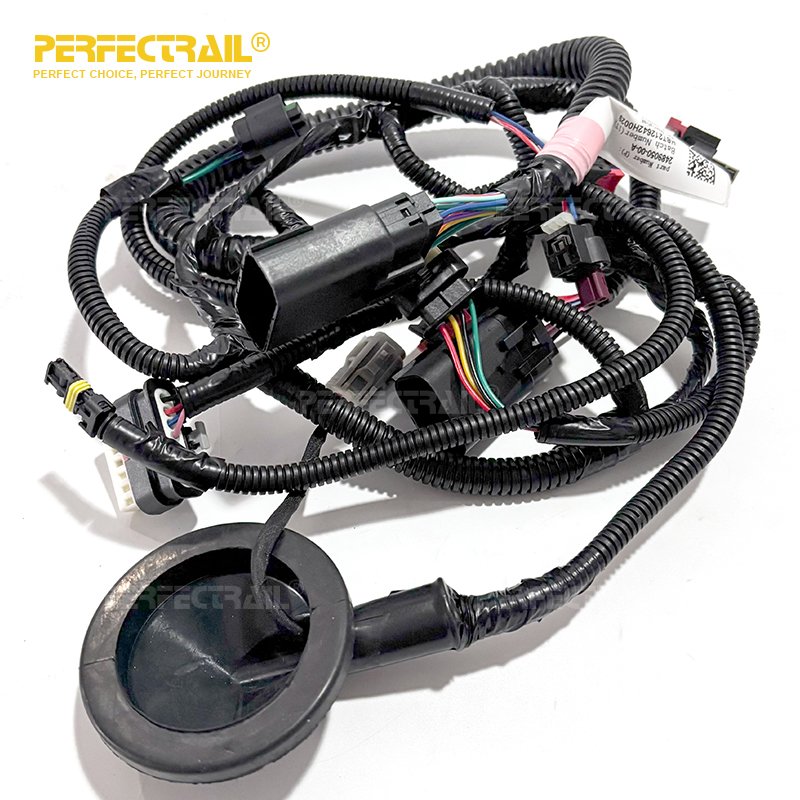
The 2489050-00-A Radiator Fan Wiring Harness for Tesla Model Y 2021-2024 is designed for buyers who need a vehicle-specific replacement reference rather than a generic length of wire. It is identified by OEM NO. 2489050-00-A and is listed for Tesla Model Y vehicles from 2021 to 2024. The product page describes an OEM-standard size and weight, with a metal and plastic construction. For a distributor, this combination of a clear OE number, vehicle application, and defined material description makes the part easier to catalogue, quote, and verify.
For B2B customers, the value of a harness is measured in more than its unit price. A usable supply program must also support accurate identification, stable quality, protective packaging, reasonable minimum order quantities, and a practical delivery schedule. Nanjing IDO Auto Technology, operating as IDO GROUP Co., Ltd., serves Tesla parts distributors, auto parts stores, repair networks, and automotive supermarkets. The company can provide original factory parts and aftermarket options, giving buyers a way to serve different budgets while maintaining a structured product range.
This article explains the role of the radiator fan wiring harness, the risks of selecting an incorrect electrical part, the checks a professional buyer should make before ordering, and the reasons Chinese Car Parts can be commercially useful when quality and documentation are managed carefully. It follows a practical structure: product overview, thermal function, construction, fitment, quality, sourcing, installation, maintenance, FAQ, and a clear quotation CTA.
2. Product Overview and Confirmed Specifications
A strong product article should distinguish confirmed information from general technical guidance. The following specifications are taken from the supplied product page and should be used as the starting point for a quotation. Buyers should still confirm current stock, connector details, and final application before placing a bulk order, especially when vehicles have regional variations or previous repair modifications.
| Item | Confirmed information |
|---|---|
| Product name | 2489050-00-A Radiator Fan Wiring Harness for Tesla Model Y 2021-2024 |
| Vehicle application | Tesla Model Y 2021-2024 |
| OEM number | 2489050-00-A |
| Material listed | Metal + plastic |
| Size and weight | OEM standard |
| Stock MOQ | 1 piece if available in stock |
| Production MOQ | 50 pieces for production |
| Warranty | 12 months |
| Listed delivery time | 7-25 days |
| Packaging | Neutral, Perfectrail, or customized packaging; brown cartons and pallet options are listed |
The most important catalogue field is the OE number. A radiator fan wiring harness can look similar to another harness while using different connector positions, branch lengths, terminal arrangements, clips, or protective routing. Publishing the complete number in the product title, URL, image alt text, internal search field, and quotation template makes it easier for a buyer to find the correct item and reduces manual interpretation by sales staff.
What the specification does and does not confirm
The page confirms the application range, reference number, broad material description, order terms, warranty, packaging options, and delivery range. It does not, in the extractable specification, publish conductor gauge, terminal plating, connector pin count, resistance value, current rating, temperature rating, or a wiring diagram. Those details should not be invented in a product listing. A professional supplier can provide additional drawings, connector photographs, or sample verification when the buyer’s repair program requires them.
This evidence-based approach improves trust. It prevents a distributor from promising a technical value that has not been tested or documented, while still giving the buyer a clear route to request the information needed for a safe procurement decision. Quality and Value Assurance Car Parts are not defined by marketing language alone; they are supported by accurate product identification and transparent technical communication.
3. How a Radiator Fan Wiring Harness Supports Thermal Management
A wiring harness is the organized electrical path between components. In a radiator fan circuit, the harness may carry power, ground, and control signals between the fan assembly, vehicle-side connectors, control modules, and associated protection or routing points. The exact architecture depends on the vehicle system and should be confirmed against service information. The commercial lesson is straightforward: the harness has to maintain electrical continuity and physical protection throughout the vehicle’s operating environment.
Electrical continuity and stable current delivery
The cooling fan motor can draw meaningful current, particularly during high thermal demand. A weak connection, damaged conductor, loose terminal, or high-resistance joint can cause voltage loss and heat at the connection. A replacement harness must therefore be matched to the intended vehicle application rather than treated as an interchangeable decorative accessory. During inspection, technicians should look for terminal deformation, discoloration, melted insulation, pulled wires, broken locking tabs, and evidence of water entry.
Physical routing and vibration control
Automotive harnesses are exposed to vibration, movement, temperature change, moisture, dust, and occasional contact with nearby components. Clips and guides keep a harness away from rotating fan blades, sharp edges, hot surfaces, and moving panels. If routing is changed during installation, the replacement may work on the bench but fail after repeated vehicle movement. Correct routing is therefore part of quality, not a cosmetic detail.
Protection from heat and moisture
The front thermal area can experience heat cycles and water spray. Plastic components help protect terminals and organize the assembly, while metal elements may contribute to structural support or secure mounting, depending on the harness design. The product page lists metal and plastic as the material combination. Buyers who require a higher level of environmental documentation should request the supplier’s available inspection information before committing to a large program.
Why a harness fault can be misdiagnosed
A vehicle that displays a cooling-related warning may have several possible causes: fan motor condition, fuse or protection device, control signal, sensor input, connector damage, power supply, software diagnosis, or wiring continuity. Replacing the fan motor without checking the harness can leave the original problem unresolved. In a professional repair environment, the harness should be inspected as part of a complete diagnostic path. This is particularly useful for a distributor because it helps sales staff guide workshops toward the correct product rather than selling an unrelated component.
The 2489050-00-A reference gives the buyer a defined starting point. It does not replace a vehicle diagnostic procedure. The best product page combines the reference number with a clear statement that buyers should verify vehicle year, OE number, connector condition, and the actual cause of failure before installation. This balance protects the buyer, the repair shop, and the supplier’s after-sales process.
4. Metal and Plastic Construction: A Practical Engineering View
The material description “metal + plastic” is useful because it tells a buyer that the assembly is not simply a loose cable. A harness typically combines conductive metal terminals and electrical conductors with polymer insulation, connector bodies, protective clips, guides, or sleeves. Each material has a different job, and a quality review should examine the assembly as a system.
Metal elements and electrical contact
Metal parts in a harness may include conductor strands, terminal contacts, crimp areas, brackets, or other supporting details. The terminal must hold the conductor securely and maintain reliable contact in the connector. Poor crimping can create a hidden resistance point that is difficult to see from the outside. For B2B inspection, sample checks should include terminal position, locking engagement, conductor retention, and any visible sign of oxidation or deformation.
Plastic insulation and connector protection
Plastic protects conductive elements from contact with neighboring parts and helps maintain the designed routing. Connector bodies also guide terminals into the correct position and support locking features. A plastic housing that is cracked, distorted, or poorly formed may make installation difficult even if the wire itself has continuity. Visual inspection should therefore cover connector geometry, clip integrity, sleeve coverage, and surface quality.
OEM-standard size and practical fit
The product page lists OEM-standard size. In the aftermarket, size means more than overall length. It includes branch location, connector orientation, mounting points, clip positions, and the available slack when installed. A harness that is too short can be strained. One that is too long can hang near moving or hot components. A correct fit supports both electrical reliability and efficient workshop installation.
What distributors should photograph
When a supplier sends pre-shipment images, ask for the complete harness, both connector ends, labels, branch points, mounting clips, terminal faces, and packing. A ruler or reference object can be used if size is a key purchase requirement, but it should not replace a formal drawing when a precise measurement is essential. These images can also become useful sales assets for a B2B catalogue, provided the actual product shown matches the stock being shipped.
Material transparency is one of the simplest ways to build E-E-A-T. It demonstrates that the supplier understands the product beyond the title, while leaving room for the buyer to request the exact data required by a particular market or repair network. IDO GROUP Co., Ltd. can support buyers with original factory and aftermarket sourcing routes, subject to product availability and order confirmation.
5. Fitment, OE Identification, and Purchasing Accuracy
Fitment is the first commercial question a professional buyer should answer. The product is listed for Tesla Model Y 2021-2024 and carries OEM NO. 2489050-00-A. That information should appear consistently in a quotation, purchase order, warehouse label, product image, and customer-facing listing. Consistency prevents one of the most common B2B errors: a correct product being ordered under a shortened or incomplete reference.
Use the full OE reference
Do not reduce 2489050-00-A to “Model Y harness.” Model names can cover different production periods and configurations. The full OE reference is a stronger identifier and should be the first field used in supplier communication. If the buyer’s original part has a label, compare the label with the requested number and provide a photograph when possible.
Confirm the vehicle before a bulk order
The product page states the 2021-2024 application. This is valuable, but the importer should still verify the vehicle’s market, production date, connector form, and previous repair history. A VIN can help a workshop or specialist confirm the correct configuration. The supplier can then compare the buyer’s information with available stock images or sample details.
Distinguish the harness from nearby parts
A radiator fan wiring harness can be confused with a fan motor, a vehicle-side connector, a front-end wiring section, a thermal sensor lead, or a complete cooling module. The listing should clearly state that the product is the wiring harness and should not imply that it includes a fan motor or an entire radiator assembly unless the quotation specifically says so. Clear scope reduces disputes and helps the repair shop order the right component.
Create a fitment confirmation record
For a single stock item, a short message confirming OE number and vehicle application may be enough. For a distributor order, retain a fitment record with the buyer’s requested part number, vehicle range, quantity, connector information, packaging preference, and approval of any sample images. This record supports repeat purchases and gives the after-sales team a clear reference if a workshop later asks about compatibility.
Fitment accuracy directly affects margin. A wrong part creates return freight, handling work, inspection time, and customer dissatisfaction. A correct part creates a smoother installation and a better chance of repeat orders. The product link for this article is the dedicated 2489050-00-A Radiator Fan Wiring Harness for Tesla Model Y 2021-2024. On the live page, buyers should be guided to send the OE number and vehicle information before placing a bulk order.
6. Quality and Value Assurance Car Parts for B2B Buyers
Quality and Value Assurance Car Parts is more than a keyword phrase. For a wholesale buyer, it describes a commercial system: correct identification, appropriate material, repeatable inspection, protective packing, honest lead times, and a response process when a question arises. A low unit price cannot compensate for repeated fitment errors or a shipment that arrives with damaged connectors.
Inspection before shipment
The product page states that the supplier performs strict inspection during production and careful checking before shipment. Buyers should translate that statement into practical inspection points. For a radiator fan harness, useful points include visual comparison with the approved sample, connector condition, terminal position, wire routing, clip presence, label accuracy, and package protection. If the buyer has a special requirement, it should be confirmed before production rather than added after shipment.
Stable quality across replenishment orders
A first sample can be acceptable while later batches vary if the approved reference is not controlled. B2B buyers should keep a sample photograph, product code, packing requirement, and key acceptance points. When a replenishment order is placed, the sales team can use those records to align purchasing and inspection. This is especially important when the buyer sells under a private label or supplies multiple branches.
Protective packaging as part of quality
Wiring harnesses are vulnerable to bending, crushing, connector impact, and loss of small clips. Neutral packing, brown cartons, pallet availability, and pallet film are listed options for this product. The buyer should select packing according to the shipping route and warehouse process. For mixed cartons, clear external labels help the receiving team separate different OE numbers without opening every box.
After-sales response
The page lists a 12-month warranty and states that the supplier responds to a quality complaint within 24 hours, retests the same stock, and provides corresponding compensation when a quality problem is confirmed. Buyers should provide the order number, part label, vehicle information, installation context, and clear photographs or video. A structured complaint helps the supplier separate fitment, installation, transport damage, and confirmed product quality issues.
This approach is valuable for an importer because it turns quality into a process that can be communicated to downstream customers. It also helps the supplier maintain a fair distinction between a confirmed manufacturing issue and a part ordered for the wrong application. IDO GROUP Co., Ltd. can provide both original factory parts and aftermarket options, allowing the buyer to select a route according to customer requirements and target price.
7. Original and Aftermarket Sourcing with IDO GROUP Co., Ltd.
Different B2B customers need different sourcing solutions. A dealership-oriented repair shop may ask for an original factory part in original retail packaging. A wholesale distributor may need a competitively priced aftermarket option with stable quality and neutral packing. An automotive supermarket may want several price levels so that its sales staff can serve insurance repairs, independent workshops, and retail customers. One supplier that can explain these options clearly is more useful than a supplier that offers only a single unexplained specification.
Original factory route
When a buyer requests an original factory part, confirm the exact reference, packaging, availability, and commercial terms. Original packaging should not be assumed from a product title alone. The quotation should identify what is included and provide current stock information. This clarity helps the buyer price the part correctly and reduces confusion between original and aftermarket inventory.
Aftermarket value route
An aftermarket harness can be commercially attractive when its fitment, construction, inspection, and warranty terms are clearly managed. The buyer should compare the complete offer rather than only the price: OE reference, application, material, packaging, MOQ, lead time, sample availability, and complaint handling. This is the foundation of Quality and Value Assurance Car Parts for a price-sensitive market.
Stock and production planning
The listed stock MOQ is 1 piece if available, while the production MOQ is 50 pieces. This supports two practical buying paths. A workshop or smaller retailer can start with a sample or one replacement unit. A distributor can move to a production quantity after demand is confirmed. Stock status should be checked at the time of inquiry because fast-moving OE parts can change availability.
Private label and packaging
Neutral, Perfectrail, and customized packaging are listed options. A buyer should send the desired artwork, carton size, label data, barcode, language, and packing quantity before approval. If a private label program is planned, establish a master sample and an inspection checklist. Free laser marking is also listed as a supplier advantage, but the marking content and location should be confirmed in writing before production.
Why a Nanjing supply partner can help
Nanjing IDO Auto Technology is positioned to serve global auto parts businesses from China. For an overseas buyer, the value of a China-based partner is not simply access to a low manufacturing cost. It can include a broader product range, coordination of several Tesla part numbers, communication with factories, package consolidation, and faster arrangement of stock items. Buyers should still evaluate each product on evidence and application accuracy, but a broad catalogue can reduce the time spent managing multiple small suppliers.
8. Installation, Inspection, and Diagnostic Workflow
Installation of electrical parts should be carried out by a qualified technician using the vehicle manufacturer’s safety procedures and the workshop’s approved diagnostic equipment. This article provides a procurement and technical overview, not a substitute for model-specific service instructions. High-voltage vehicle systems require particular care, and the technician should identify the relevant safe isolation procedure before working near the vehicle’s thermal or electrical systems.
Step one: document the original harness
Before removal, photograph the original routing, connector orientation, clips, branch locations, and labels. Mark the left or right position where relevant. Record any existing damage, melted areas, abrasion, water entry, or pulled terminals. This record helps determine whether the harness itself failed or whether a nearby component caused the damage.
Step two: compare the replacement
Compare the replacement with the approved original or sample before installation. Check the OEM number, connector shape, terminal face, branch length, clips, protective sleeve, and overall routing. Do not force a connector that does not align naturally. A mismatch should be stopped and reported before the part is modified.
Step three: protect the circuit during installation
Use approved tools for connector release and terminal handling. Avoid pulling wires directly. Keep terminals clean and protect the harness from sharp edges and moving fan components. Restore every clip and guide so the harness does not vibrate against adjacent structures. Do not use an improvised tie arrangement that places tension on the connector.
Step four: inspect the complete fan circuit
After installation, the technician should inspect the relevant fuses, connectors, power and ground paths, control signals, fan condition, and diagnostic information according to the service procedure. A new harness cannot compensate for a seized fan motor or an unrelated control fault. A complete check protects both the vehicle and the supplier relationship.
Step five: record the result
Record the replacement OE number, installation date, vehicle identity, fault symptoms, and test result. For a commercial repair network, this information supports warranty administration and future parts ordering. For a distributor, it creates useful feedback about which applications generate demand and which questions customers ask most often.
Correct installation is a key part of product value. The same harness can perform differently in the field if it is routed incorrectly, if a connector is forced, or if the original fault remains unresolved. A supplier’s responsibility is to provide an accurate component and clear product information; the workshop’s responsibility is to follow qualified repair procedures.
9. Maintenance, Storage, and Complaint Prevention
A wiring harness normally does not require a service interval in the same way as a fluid or filter. However, the surrounding system and the stock environment affect its service life. Regular inspection is useful when the vehicle is already being repaired or when a thermal warning, intermittent fan operation, or visible front-end damage is reported.
Vehicle-side inspection points
Look for abrasion, heat discoloration, water entry, loose connectors, broken clips, and contact with a rotating or moving component. Check whether previous repairs have stretched, spliced, or rerouted the harness. If a harness was damaged by an impact, inspect nearby brackets and fan components before installing a replacement. The purpose is to prevent repeat failure.
Warehouse storage
Store harnesses in clean, dry packaging away from direct sunlight, excessive heat, water, oils, and sharp objects. Avoid placing heavy cartons on connector ends. Keep each OE number separated and clearly labelled. A first-in, first-out rotation reduces the risk of old stock being forgotten in a warehouse and makes the inventory easier to count.
Receiving inspection
When cartons arrive, photograph the pallet and external condition before opening. Count the pieces, compare labels with the purchase order, and inspect a sample from each carton. Note crushed packaging, bent clips, exposed terminals, or missing labels immediately. Early evidence makes it easier to distinguish transport damage from a later installation issue.
How to manage a quality complaint
Ask the customer for the OE number, vehicle year, VIN if available, installation photographs, fault symptoms, and any diagnostic information. Do not assume every fan-related warning is a harness failure. Send the evidence to the supplier for review, preserve the part, and avoid modifying or discarding it before the inspection is complete. The product page states that the supplier will retest the same stock when a quality problem is reported and confirmed.
Inventory planning for distributors
Track sales by OE number, vehicle year, destination, customer type, and return reason. If 2489050-00-A sells primarily through repair shops, provide a technical fitment note with every quotation. If it sells through retail channels, improve the packaging label and add a QR code to the product page. Data from ordinary sales conversations can help a distributor decide whether to hold one piece for urgent demand or plan a larger production order.
10. Frequently Asked Questions for B2B Buyers
What is the OE number of this radiator fan wiring harness?
The listed OEM reference is 2489050-00-A.
Which vehicle does the product fit?
The supplied product page lists Tesla Model Y vehicles from 2021 to 2024. Verify the vehicle, OE number, and connector before ordering.
What materials are listed?
The product page lists metal and plastic. Exact conductor, terminal, and insulation details should be confirmed when a project requires additional technical documentation.
What is the MOQ for a stock item?
The listed stock MOQ is 1 piece when available. The listed production MOQ is 50 pieces.
What warranty is provided?
The product page lists a 12-month warranty. Buyers should retain order and installation records.
How long is the listed delivery time?
The listed delivery time is 7-25 days. Confirm stock, production status, destination, and shipping method before payment.
What packaging options are available?
Neutral, Perfectrail, or customized packaging is listed as acceptable. Brown cartons, pallets, and pallet film can also be discussed.
Can the supplier provide original and aftermarket parts?
IDO GROUP Co., Ltd. supports original factory parts and aftermarket options. Confirm the exact sourcing route, packaging, and specification in the quotation.
How can I reduce the risk of wrong fitment?
Send the OE number, vehicle year, VIN when available, connector photographs, and images of the original harness. Ask for written fitment confirmation before bulk ordering.
Can I request a sample?
The product page states that samples are available. Contact the sales team to confirm sample price, stock status, shipping, and testing requirements.
11. Request a B2B Quote for 2489050-00-A
Build a dependable Tesla Model Y parts program with accurate OE identification, original or aftermarket sourcing options, protective packaging, practical MOQ support, and a delivery plan aligned with your market.
View the product and request a quotation
IDO GROUP Co., Ltd. | Nanjing, Jiangsu, China | Chinese Car Parts for global B2B buyers